🚨 Promo Ending Soon! Purchase your new signature while our limited-time deal is active.
From Paper to PDF: How to Use One Signature Across Every Platform
Learn how to use one professional signature across paper, PDFs, email, and digital documents while maintaining clarity, trust, and consistent personal branding.
2/10/20262 min read
From Paper to PDF: How to Use One Signature Across Every Platform
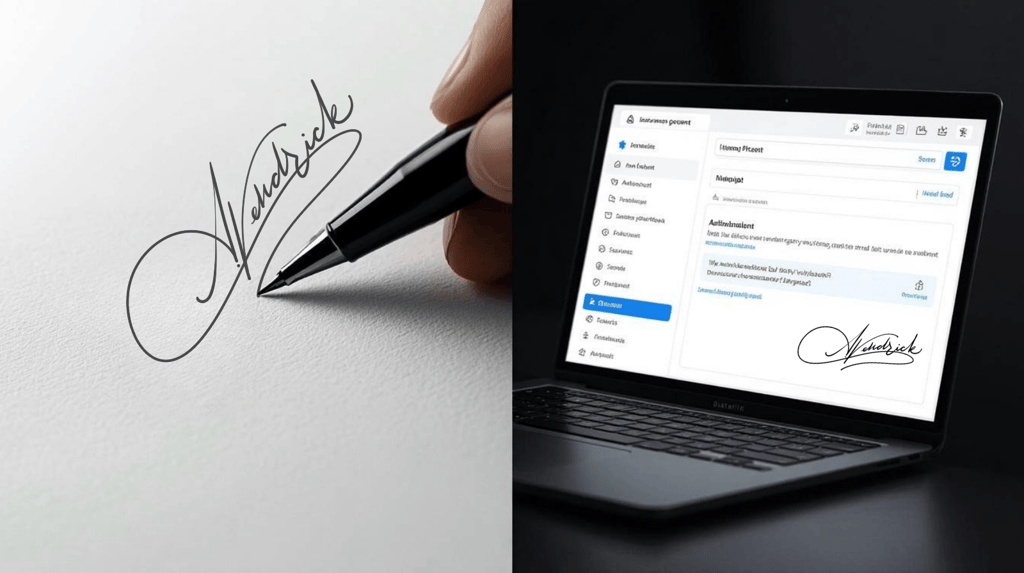
In today’s professional environment, the same decision may be approved on paper, confirmed in an email, and finalized in a PDF—sometimes within the same hour. As workflows shift fluidly between physical and digital spaces, professionals face a subtle but important challenge: maintaining a single, consistent signature across every platform.
This consistency is more than aesthetic. It influences trust, recognition, legal clarity, and personal branding. A signature that changes from pen to screen can quietly weaken professional perception, while a unified signature strengthens credibility everywhere it appears.
Why Consistency Matters More Than Ever
Modern communication is fragmented. Documents move between devices, formats, and systems. Colleagues may only know you through digital correspondence, while regulators or partners may only see your signature on formal paperwork.
When each version of your signature looks different—one scribbled, one scanned poorly, one typed—the result is visual inconsistency. Over time, this erodes recognition and may even create ambiguity in formal contexts.
A single, repeatable signature solves this. It becomes a stable visual identity that travels with you, reinforcing professionalism regardless of medium.
The Risk of Separate “Paper” and “Digital” Signatures
Many professionals unintentionally maintain two signatures:
A quick handwritten version for paper
A distorted scan or typed name for digital use
This separation creates subtle problems:
Reduced trust in formal documents
Inconsistent brand identity across communication
Lower clarity in verification or disputes
Unpolished appearance in emails and PDFs
These risks rarely appear suddenly. Instead, they accumulate quietly across hundreds of documents.
Designing a Signature for Cross-Platform Use
A signature that works everywhere must balance:
Distinctiveness (recognizable identity)
Repeatability (easy to reproduce consistently)
Clarity at small sizes (emails, PDFs, mobile screens)
Natural handwriting flow (comfortable in real use)
This is why intentional design matters. A signature created only for pen and paper may fail digitally, while a purely digital mark may lack authenticity.
The goal is one signature, optimized for both worlds.
Technical Foundations of a Universal Signature
Professionals often overlook the technical side of signatures. Yet usability depends on correct preparation. A cross-platform signature should include:
High-resolution digital files for clarity
Transparent background formats for documents
Proper scaling for email and mobile viewing
Consistency between handwritten and digital appearance
Without these elements, even a visually strong signature can appear unprofessional in practice.
Psychological Power of Visual Consistency
Human perception favors repetition. When people repeatedly see the same visual mark associated with your name, recognition forms subconsciously. Over time, this builds familiarity and trust.
Inconsistent signatures interrupt this process. A unified signature accelerates it.
This is why major brands protect visual consistency so carefully—and why professionals benefit from doing the same with their signatures.
Legal and Compliance Considerations
In regulated or high-trust environments, signature consistency also supports:
Document authenticity
Audit clarity
Reduced ambiguity in disputes
While legality depends on many factors, visual consistency strengthens the evidentiary trail of intent and authorization.
Long-Term Professional Value
Unlike software or branding assets that change frequently, a signature often lasts years or decades. Investing in a universal signature is therefore a long-term decision that quietly supports professionalism every day.
Small detail. Repeated thousands of times.
That is where real impact lives.
Ready to Use One Signature Everywhere?
Your signature should move seamlessly from paper to PDF, email to contract, without losing clarity, identity, or professionalism.
A custom signature designed for cross-platform use ensures that every document you sign reflects the same confidence and consistency.
Create your custom signature today and carry one professional mark across every platform you use.
Connect
Crafting unique signatures for every individual need.
© 2026. All rights reserved.