🚨 Promo Ending Soon! Purchase your new signature while our limited-time deal is active.
Visual Authority: Why Some Signatures Instantly Feel More Credible
Why do some signatures feel more authoritative than others? Explore the psychology of visual credibility and how signature structure influences professional perception and leadership presence.
3/4/20267 min read

Understanding the Impact of Visual Structure in Corporate Psychology
Visual structure serves a crucial role in the context of corporate psychology, particularly concerning leadership and authority. The arrangement of visual elements—whether in presentations, branding, or corporate communications—can significantly influence perceptions of credibility. This influence is rooted in visual psychology, which examines how individuals interpret visual stimuli and how these interpretations affect their thoughts and behaviors.
In corporate environments, balance, proportion, and movement are essential components of visual communication. Balance relates to the equal distribution of elements, yielding a sense of stability and reassurance. For instance, a well-structured corporate presentation that employs symmetry can inspire confidence in the speaker, thereby reinforcing the audience’s perception of their authority. Proportion, on the other hand, pertains to the size relationships of various elements; maintaining appropriate proportions ensures that significant information is highlighted, guiding the viewer’s focus effectively. In leadership contexts, this can mean presenting oneself in a larger frame than the surrounding data, which projects authority.
Movement, the third critical component, refers to the flow of visual elements and how they guide the viewer's eye. This can be particularly impactful in video content shared by corporate leaders or in dynamic presentations, where a coherent narrative fosters engagement and leaves a lasting impression. For example, a dynamic leader who utilizes movement within their visual aids can convey energy, fostering a perception of a proactive and modern authority.
Ultimately, understanding the visual structure's implications is vital for leaders aiming to establish credibility in corporate settings. By utilizing principles of visual psychology effectively, leaders can enhance their perceived authority, thereby influencing organizational culture and employee engagement. In today’s visually-driven corporate landscape, the strategic application of these elements goes beyond aesthetics; it becomes a powerful tool for fostering trust and leadership effectiveness.
Design Characteristics That Convey Authority
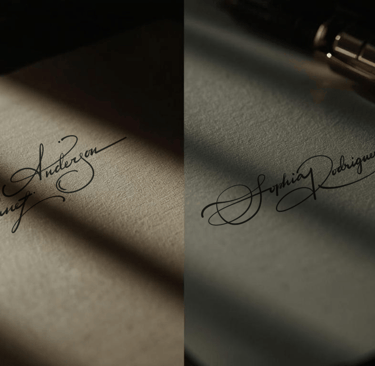
Understanding the relationship between design characteristics and perceived authority in signature design is crucial for effective leadership. Certain attributes like stroke direction, rhythm, size balance, and spatial control play a pivotal role in how individuals interpret authority through visual cues.
The stroke direction in a signature can communicate confidence and decisiveness. For instance, upward strokes often symbolize ambition and positive energy, while downward strokes can exude a more subdued and introspective nature. Leaders who adopt an upward stroke direction in their signatures can instill a sense of forward momentum and aspiration, which is often associated with effective leadership. Additionally, the consistency of stroke styles—whether fluid or jerky—can also signal a leader’s reliability and steadfastness.
Rhythmic elements within a signature enhance its visual flow, creating an impression of harmony and cohesion. A rhythmic design can signify a structured and organized mindset, traits that are essential for authoritative figures. The use of repeating curves or patterns can make a signature visually engaging, echoing elements of confidence and sophistication. Furthermore, a well-rhythmed signature suggests that the leader possesses an understanding of balance and measures, allowing for a stronger connection with their audience.
Size balance is another critical factor, where a proportional and well-composed signature conveys seriousness and professionalism. A signature that is too large may come off as arrogant, while one that is inadequately sized could imply a lack of self-assurance. Therefore, achieving the right size balance is vital for presenting oneself with authority. Lastly, spatial control—how elements are spread within the signature space—can affect the overall impression. A signature with appropriate spacing reflects clarity of thought and purpose, essential qualities for leaders striving to establish their authority.
The psychology behind stroke direction and movement plays a significant role in signature design, influencing perceptions of authority and leadership. Stroke direction refers to the angle and flow of the pen during the writing process, while movement encapsulates the manner in which the signature is formed. These elements can communicate powerful messages about a person's personality and image without the need for words.
When analyzing signature attributes, upward strokes are often associated with positive connotations. They can evoke feelings of progress, optimism, and confidence, which resonate well with leadership qualities. An upward trajectory in signature design may suggest ambition and a forward-thinking mindset, traits that are typically admired in authoritative figures. As such, incorporating deliberate upward strokes into a signature can reflect a strong, aspirational personality that seeks to foster trust and respect among colleagues and peers.
Conversely, downward strokes or erratic movements within a signature might be interpreted as negative or unstable. Sigils exhibiting downward tendencies may convey a sense of uncertainty, lack of confidence, or even defeatism. This can impact how an individual's leadership is perceived, suggesting hesitancy or a diminished capacity to inspire or direct others. Furthermore, erratic movements can signal chaos, undermining the reliability that is often sought in effective leadership. Therefore, those looking to establish authority through their signatures should be mindful of these psychological implications.
In essence, the subtle nuances in stroke direction and movement within a signature carry profound significance. These elements not only shape the visual appeal of the signature but also play a crucial role in communicating an individual’s strength and reliability. Understanding these basics can empower leaders to present themselves in a manner that aligns with their intended personal and professional image.
Rhythm, Size, and Balance: Essential Elements of Authoritative Signatures
The elements of rhythm, size, and balance play a critical role in shaping perceptions of authority through signature design. Rhythm in a signature can often reflect a sense of flow and movement, implying confidence and assurance. When a signature is rhythmical, it appears more intentional and composed, which can foster a strong impression of authority in the eyes of the viewer. A steady, rhythmic signature conveys control and reliability, instilling trust and respect.
Size undoubtedly carries significant weight in the interpretation of a signature's authority. A larger signature is often perceived as more assertive and bold, suggesting that the signer possesses a strong personality and is comfortable taking charge. Conversely, a smaller signature may evoke feelings of timidity and uncertainty, potentially undermining the authority of the individual. Size variations within a signature can effectively communicate the signer’s confidence level or the degree of importance attributed to the document being signed.
Balance is equally essential in signature design; it refers to the visual stability created by the arrangement of letters and flourishes. A well-balanced signature projects a sense of professionalism and consistency. Conversely, an unbalanced signature may appear haphazard and can influence perceptions negatively, casting doubt on the signer’s credibility. This visual equilibrium can reinforce the notion of control and command, necessary traits for authoritative leadership.
In essence, signatures that exhibit harmonious rhythm, appropriate size, and visual balance significantly impact how authority is perceived. When readers encounter a signature that embodies these elements, they are more likely to associate it with confidence and assertiveness, thereby enhancing the overall perception of the signer’s authority.
Spatial Control: The Hidden Message in Signature Placement
In the realm of leadership, visual elements play a crucial role in establishing authority and influence. Among these elements, the spatial control represented by signature placement is often underestimated. A signature is not merely a personal identifier; it serves as a powerful visual tool that can communicate a leader's confidence, decisiveness, and overall authority. When examining documents, the location and space surrounding a signature can significantly impact perceptions of leadership.
The positioning of a signature at the bottom right corner of a document suggests a sense of finality and ownership. This strategic placement evokes an image of readiness to take responsibility. On the contrary, when a signature is positioned in a less prominent location, such as the center or the left side, it may diminish the perceived authority of the individual who has signed. This subtle yet powerful effect highlights the importance of spatial dynamics in asserting leadership presence.
Moreover, the amount of white space around a signature can also send important messages about the individual's leadership style. A signature enveloped by ample space may convey contemplation and thoughtfulness, suggesting that the leader values careful consideration and reflection. In contrast, a signature crowded by other text or elements on the page can imply a hasty decision or lack of confidence, potentially undermining perceptions of authority.
Thus, understanding spatial control is essential for effective communication within written documents. Leaders should be mindful of how their signatures are presented, as this seemingly minor detail can significantly influence how they are perceived by others. By leveraging signature placement thoughtfully, individuals can reinforce their leadership position and communicate a strong, authoritative presence in all written correspondences.
Subtle Signals of Leadership in Business Communication
In the realm of business communication, effective leaders understand the importance of visual elements that project authority and influence. Signature design, often overlooked, plays a significant role in this context. The signature serves as a personal branding tool, conveying not only the individual’s identity but also their leadership style. Executives, lawyers, and founders strategically utilize their signatures to reinforce their authority, projecting confidence and professionalism.
For instance, a well-structured signature can embody characteristics such as stability, trustworthiness, and decisiveness. These qualities are paramount for leaders who seek to establish credibility within their organizations and with external stakeholders. The design of one's signature is not merely an aesthetic choice; it is an extension of a leader's overall presence, reflecting their approach to communication. A bold and clear signature might suggest assertiveness, while a more elaborate one may indicate creativity and openness to new ideas.
Moreover, the integration of a signature into official documents, emails, and correspondence further enhances its subtle yet powerful symbolic presence. It acts as a visual endorsement of the thoughts and ideas conveyed within the communication, establishing a personal connection with the recipient. In high-stakes environments, such as legal proceedings or executive meetings, the visual representation of authority through signature design becomes even more pronounced.
Ultimately, leaders who pay attention to the nuances of their signature design can effectively augment their communication strategies, ensuring that their authority is recognized both visually and contextually. This alignment between visual cues and leadership presence can influence perceptions, boost confidence among team members, and foster trust and respect in professional relationships.
Aligning Your Signature with Your Leadership Presence
In the realm of professional development, possessing a signature that effectively encapsulates one's leadership presence is paramount. It is a reflection not only of personal style but also of the qualities that aspiring leaders strive to embody, such as confidence, reliability, and authority. To align your signature with your desired leadership image, a systematic approach can be beneficial.
First, consider the fundamental aspects of your signature. Is it clear and legible? A well-crafted signature should be easily identifiable and should communicate professionalism. Opt for a design that is neither overly ornate nor too simplistic, as this balance can convey confidence. Additionally, the size and slant of your letters can significantly affect how you are perceived. A bold signature often exudes strength and authority, while a more fluid signature can suggest adaptability and creativity.
Next, evaluate the character of your signature. Review each letter and their connections to ensure that they positively reflect your professional identity. For example, rounded letters may project friendliness, while angular letters can imply rigor and determination. It might also be advantageous to examine the overall flow of your signature. A smooth and cohesive design often indicates reliability and stability—important traits for leaders to portray.
Another actionable step is to seek feedback from trusted colleagues or mentors. They can provide valuable insights into how your signature may be perceived by others in your professional network. Moreover, consider examining signatures of well-respected leaders within your industry to glean inspiration for refining your own.
Ultimately, aligning your signature with your leadership presence involves thoughtful reflection and iterative adjustments. By focusing on clarity, character, and feedback, you can cultivate a signature that enhances your authority and reinforces the leadership image you aspire to present.
Connect
Crafting unique signatures for every individual need.
© 2026. All rights reserved.